
Why It Takes So Long
The Church does not make saints. God does. What the Church does is recognize them, and she takes her time about it.
That patience can look strange from outside. Everyone in a parish may already be certain that a particular priest or mother or teenager was holy. Rome will still want years of testimony, a warehouse of documents, doctors who do not believe in miracles, and theologians paid to be difficult.
The reason is simple. When the Church names someone a saint, she is not paying a compliment. She is making two claims at once, and both are enormous. The first is about where that person is now: that he or she is united with God in heaven. The second is about us: that here is a life we may safely imitate, and a friend we may safely ask for help.
Claims that large have to be tested.
What follows is the whole path, from a first stirring of devotion in a parish to a Mass in St. Peter's Square.
The Four Titles
Before the details, it helps to know the map. There are four stages, and each has its own name.
Servant of God. The cause has been officially opened. The investigation is under way.
Venerable. The Church has declared that this person lived the Christian virtues to a heroic degree, or died a martyr, or offered their life for others. Anyone may pray to a Venerable privately, but there is as yet no feast day and no public veneration.
Blessed. The person may now be publicly venerated, though only within a limited sphere: usually their own diocese, sometimes their country, sometimes their religious family.
Saint. The person may be publicly venerated by the whole Church, everywhere.
Every canonization passes through all four. There are no shortcuts, though as we shall see there are a few exceptions.
Where It Begins: Reputation
Nothing starts in Rome. It starts among ordinary people.
Church law requires what it calls a reputation for holiness. This is not fame. It is the settled conviction of those who actually knew the person that his or her life was upright, rich in Christian virtue, and fruitful for others. It has to be genuine, widespread, and lasting, and it should grow rather than fade after death.
Alongside it there must be a reputation for intercessory power. People who have prayed to God through this person report that something happened: a healing, help through a crisis, a conversion, a marriage saved.
Without both of these, a cause cannot begin. The Church waits for the faithful to speak first.
The Five-Year Wait
A cause cannot normally be opened until five years have passed since the candidate's death.
One reason is human. Grief and admiration run hot immediately after a death, and the Church wants the emotion of the moment to settle before anyone begins weighing evidence. Five years is roughly how long it takes for a genuine reputation to prove that it is genuine.
The other reason is less comfortable, and the Church is candid about it. Time also allows difficulties to surface. If there is something in a life that ought to be examined, it is far better that it come to light while the investigation is open than after it has closed.
The Pope can dispense from this rule, and occasionally does.
Stage One: The Diocesan Phase
The first stage belongs not to Rome but to the bishop of the diocese where the candidate died.
Someone must ask. A group known formally as the promoter of the cause, which may be a diocese, a parish, a religious congregation or an association, petitions the bishop through an appointed official called the postulator.
Rome must clear the way. Before opening anything, the bishop obtains from the Holy See a document confirming that there is no objection to proceeding.
A tribunal is formed. The bishop appoints his delegate to preside, a promoter of justice whose job is to test the case rather than support it, and a notary to keep the record.
From this moment the candidate is called a Servant of God.
Witnesses are heard. People who knew the candidate come before the tribunal and are questioned in detail. They are not asked for impressions. They are asked for facts: what he did, what she said, on what day, in whose presence. The tribunal is looking for concrete evidence of the seven Christian virtues practised to an extraordinary degree.
Those seven are the three theological virtues, faith, hope and charity, and the four cardinal virtues, prudence, justice, temperance and fortitude. Alongside them the tribunal weighs the virtues proper to the person's state in life, since holiness looks different in a bishop, a mother and a soldier.
The witness list is often long. Several dozen is normal.
Documents are gathered. A historical commission collects everything written by or about the Servant of God, including private letters and diaries.
The writings are examined. Two theological censors read everything the candidate ever published, looking for anything contrary to faith or morals. Nothing is skipped.
The evidence is sealed. When the work is complete, the bishop presides at a closing session and the acts are sealed and sent to Rome.
Stage Two: The Roman Phase
The material now arrives at the Dicastery for the Causes of Saints, and the case passes into the hands of specialists.
A relator is assigned. This official guides the postulator, who must now reside in Rome, through the next and largest task.
The Positio is written. The word is Latin for a position paper, and its full title means the position on the life, virtues and reputation for holiness of the Servant of God. It is a single volume, often enormous, that assembles everything gathered in the diocese into a coherent argument. It must establish the life, the virtues or the martyrdom, and the reputation, beyond reasonable doubt.
Writing it can take years.
Nine theologians vote. The Positio goes to a panel of theological consultors, who examine it and cast their votes. A qualified majority is required to go further.
Historians vote too, in older cases. If the candidate lived long ago and no living witness can be called, a commission of historians examines the case as well.
The cardinals and bishops vote. If the theologians approve, the file goes to the members of the Dicastery, who meet in ordinary session about twice a month.
The Pope decides. The prefect of the Dicastery presents the case to the Holy Father. If he approves, he authorizes the decree.
When that decree is promulgated and publicly read, the Servant of God becomes Venerable.
The title changes less than most people expect. It brings no feast day and no public liturgical honour. What it brings is an invitation. The Church has now looked hard at this life, found it worth proposing, and asks the faithful to imitate it and to pray.
Three Roads to This Point
Not every holy life looks the same, and the Church recognizes three distinct routes to the title of Venerable.
Heroic virtue. The ordinary road. The candidate, called a confessor, bore witness to the faith over a lifetime without dying for it, and practised the virtues to an extraordinary degree.
Martyrdom. The candidate accepted a death inflicted out of hatred for the faith, what the Church calls odium fidei, and accepted it in a Christian manner.
The offering of life. Opened as a third road in 2017. This covers those who freely and voluntarily offered their lives for others and persevered in that offering until death, in what the Church calls a supreme act of charity, even though they were not killed out of hatred for the faith and had no long record of heroic virtue behind them.
The distinction matters for what comes next, because martyrs take a shorter path.
Stage Three: Beatification
A Venerable becomes Blessed in one of two ways.
If a martyr, immediately. No miracle is required. The martyrdom is itself the sign.
Otherwise, a miracle is required. One miracle, worked by God through the candidate's intercession, after the candidate's death.
In practice this almost always means a healing, and the standard is high.
First a medical commission examines the case. It is made up of specialists in the relevant field, and it deliberately includes both believers and non-believers, because the question put to them is not religious. They are asked one thing: can medicine explain this? For a healing to pass, it must be complete, it must be lasting, and in most cases it must have been rapid.
If the doctors report that they cannot explain it, the theological consultors take up a different question: can this healing properly be attributed to this candidate's intercession?
That question is more concrete than it sounds. The theologians look for evidence that people prayed to this candidate specifically, by name, for this particular need. If the same family was also invoking two other saints for the same intention, the case will not stand, not because the prayer was wrong but because the attribution cannot be established.
It is worth pausing here, because this explains something about causes in general. A miracle is not simply a wonder that occurs near a holy person's memory. It is an answered prayer, and the Church has to be able to see who was asked.
If the theologians are satisfied, the cardinals and bishops vote. Then the Pope authorizes the decree.
The beatification itself is the granting of public veneration, but within limits. The new Blessed is entered in the liturgical calendar of his or her own diocese or religious family, usually on the anniversary of death, or on another day of particular significance.
Stage Four: Canonization
For a Blessed to be declared a Saint, a second miracle is required, and it must have taken place after the beatification.
The reason for that timing is precise. The Church is looking for evidence that the faithful are now praying to this person and that God is answering. The second miracle is a confirmation of the first judgment.
It is tested exactly as the first was: doctors, theologians, cardinals and bishops, and finally the Pope.
Canonization itself is a solemn declaration. The Pope states that this person is united with God in heaven and is worthy of veneration by the whole Church, everywhere. It is normally done at a Mass in Rome, and it takes its name from what happens there, since the new saint's name is entered in the canon, which simply means the official list.
Catholic teaching holds that in making this declaration the Pope is preserved from error. That is why the Church is so careful beforehand. A canonization cannot be revisited.
Who Is Who
A cause is argued rather than assumed, and it has something close to a prosecution and a defence.
The postulator carries the case forward and is responsible for proving the candidate's holiness. He is appointed by whoever proposed the cause.
The promoter of the faith, historically nicknamed the devil's advocate, exists to scrutinize the testimony and the documents and to raise every reasonable objection. He is employed by the Dicastery, not by the promoters of the cause.
The relator guides the preparation of the Positio.
The medical board answers only the medical question, and is not asked to believe anything.
The point of this arrangement is that nobody involved is simply cheering.
The Office Behind It All
The department in Rome has changed shape more than once.
In 1969 Saint Paul VI split the old Sacred Congregation of Rites in two, creating one body for divine worship and another for the causes of saints. The new congregation was organized into three offices: a judicial office, an office of the promoter general of the faith, and a historical and hagiographic office.
In 1983 Saint John Paul II reformed the whole procedure through an apostolic constitution whose Latin title means "The Divine Teacher of Perfection." He placed the investigation firmly in the hands of diocesan bishops acting by their own right, and equipped the congregation with a college of relators to prepare the Positiones. These are the rules still followed today, and they shortened the process considerably.
In 1988 the same Pope confirmed its name as the Congregation for the Causes of Saints. In 2022 Pope Francis renamed it the Dicastery for the Causes of Saints as part of his wider reform of the Roman Curia.
For the Jubilee of 2025 Pope Francis also established within it a Commission of New Martyrs, charged with compiling a catalogue of all those, including Christians of other denominations, who have shed their blood for Christ in our own time.
The Dicastery is currently led by Cardinal Marcello Semeraro as prefect, with Archbishop Fabio Fabene as secretary.
What It Costs
A cause is expensive. There are commissions to convene, experts to bring to Rome, and volumes to print.
The Dicastery works to keep costs down, and administrative rules approved by Pope Francis in 2016 require transparency in how the money is raised and spent. A solidarity fund exists to help causes that come from poorer dioceses, so that a candidate's holiness rather than a diocese's wealth decides whether the work goes forward.
How Long, and How Many
There is no fixed timetable. The length of a cause depends on how many witnesses must be heard, how long the Positio takes to write, how quickly the consultors work, and how long the doctors need with a medical file.
Some causes conclude in a decade. Others have been open since the fifteenth century.
The scale is larger than most people imagine. From the founding of the congregation in 1969 up to 2020, more than three thousand beatifications and nearly fifteen hundred canonizations were carried through. With two ordinary sessions a month and three or four cases examined at each, roughly seventy to eighty causes reach their conclusion in a given year.
When the Rules Bend
The Pope is the final authority, and he can set the ordinary procedure aside.
Benedict XVI waived the five-year wait for Saint John Paul II, opening his cause within weeks of his death.
Pope Francis canonized Saint John XXIII without a second miracle, on the strength of a reputation for holiness that had spread across the world for decades.
There is also an ancient path called equivalent canonization. Here the Pope, after the necessary investigation, simply confirms a devotion that the faithful have already sustained for centuries, without requiring a miracle. It is used for figures whose holiness has been taken for granted so long that a formal trial would be an odd thing to begin.
These exceptions are rare, and they prove the rule rather than replace it.
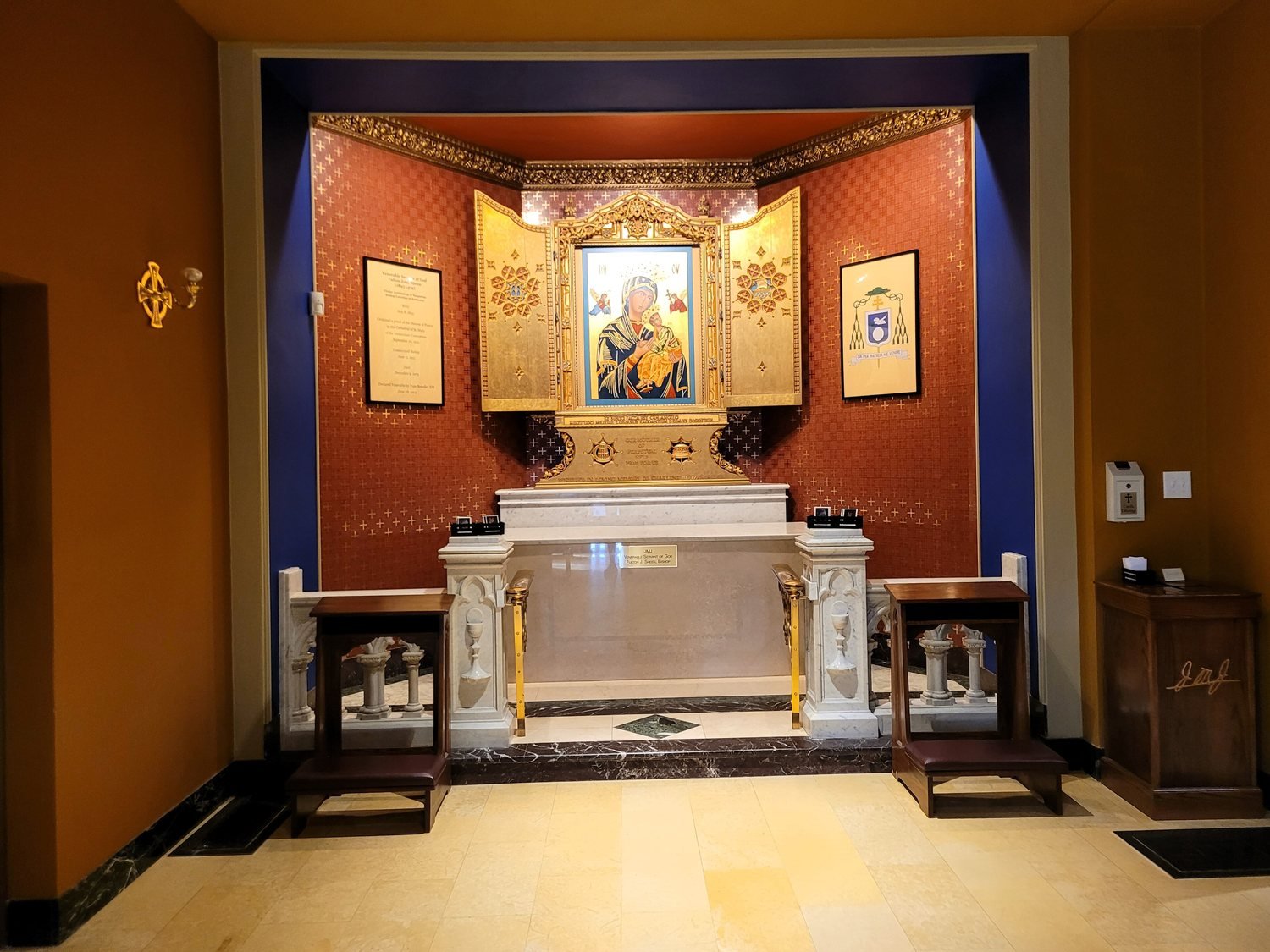
Where Fulton Sheen Stands
Venerable Fulton J. Sheen has travelled almost the whole of this road.
His cause was opened in Peoria in 2002, making him a Servant of God. The diocesan inquiry ran from 2004 to 2008. The Positio reached Rome and was approved by the theologians in 2011, and by the cardinals and bishops in May 2012. On 28 June 2012 Pope Benedict XVI declared him Venerable.
The miracle required for beatification, the restoration of a stillborn child after sixty-one minutes without heartbeat or breath, was recognized by Pope Francis on 6 July 2019.
His beatification is set for 24 September 2026. After that, one more miracle stands between him and canonization, and it will have to happen after the beatification.
Which means that from the day he is declared Blessed, the next step depends on something very simple, and very specific. It depends on people praying to him by name, for particular needs, and telling the Church when God answers.
Read his life | Follow his cause | Pray with him
Sources: the Dicastery for the Causes of Saints, and the note on canonical procedure issued by the Holy See Press Office. Latin terms have been translated into English throughout.